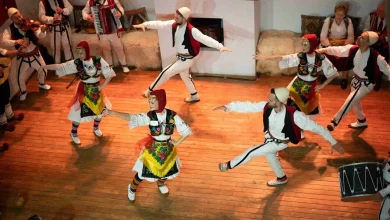

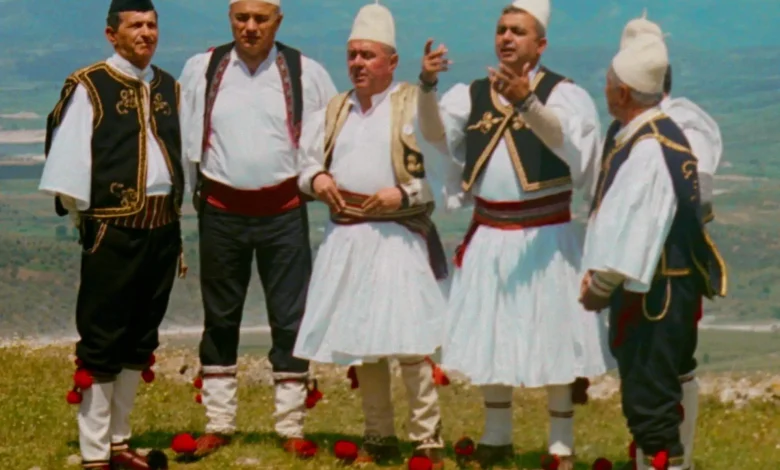
Music, dance, and performing arts have always been an essential part of Albanian cultural identity, serving as forms of artistic expression, historical storytelling, and community connection. These elements are present in everyday life and in special events, from weddings and traditional celebrations to ritual ceremonies and artistic manifestations.
Dance, as one of the most powerful artistic expressions, is an art form where body movement intertwines with rhythm and music, creating a unique aesthetic and social experience. From ceremonial wedding dances to spontaneous festivities, dancing in Albanian culture is an expression of joy, unity, and tradition.
Traditional theatrical performances include a combination of acting, singing, dancing, and music, often interwoven with dialogues, epic narratives, or recited poetry. A unique form of this tradition includes puppet shows and pantomimes, which have been passed down from generation to generation as an important cultural treasure.
In this article for Votra Magazine, we will explore some of the most important traditions of Albanian music and dance, including the Shkodra Aheng, Iso-Polyphony, the Tropoja Dance, and special folk songs that keep alive the spirit of the Albanian people.
Shkodra Aheng: Urban Music with an Old Charm
The Shkodra Aheng, developed at the end of the 18th century and enriched until the 1940s, is one of the most well-known forms of Albanian urban music. This special song genre, influenced by oriental music, has preserved a refined style, distinct from other Albanian musical traditions.
In the city of Shkodra, oriental melodies were adopted and adapted by the masters of the aheng, who added rich musical and stylistic elements. The aheng was mainly sung at weddings, family celebrations, courtyards, and gardens of traditional houses, and later became part of concert stages and media.
Main Instruments of the Aheng
Saz – A 10-string instrument of oriental origin, serving as the lead melody instrument.
Qemane (violin) – Provides a soft and sensitive tone.
Dajre – Offers the light and gentle rhythm that characterizes the aheng. The earliest documented group of Shkodra aheng was that of Mehmet Shllaku, who began performing at the end of the 18th century. This musical style remains unique and irreplaceable in Albanian culture.
Albanian Iso-Polyphony – UNESCO Heritage – Iso-polyphony is one of the most distinctive forms of Albanian folk music, included in UNESCO’s Intangible Cultural Heritage list. This singing tradition is present in Labëria, Çamëria, Myzeqe, and Toskëria, with Labëria being the most renowned for polyphonic songs.
Structure of Iso-Polyphony
Marrësi (The Taker) – Initiates the melody and sets the tone.
Pritësi (The Follower) – Follows and completes the melodic line.
Mbajtësi (The Holder) – Supports the song by maintaining the tonal base.
Hedhësi (The Thrower) – Adds interwoven vocal elements that make iso-polyphony complex and unique.
These songs can be dance songs, epic, lyrical, and ritual, reflecting the life, joys, pains, and history of the Albanian people.
The Tropoja Dance: The Dance that Reflects the Spirit of the North
The Tropoja Dance, one of the most dynamic and expressive dances of Northern Albania, is a festive dance included in UNESCO.
This dance is characterized by:
Energetic vertical movements, where dancers make high jumps from the ground. Lack of physical contact between dancers, as the dance is performed face-to-face. Changing of partners, especially in wedding dances.
It is used in weddings, village celebrations, and various ceremonies, serving as an important form of cultural expression and social recognition. The accompanying instruments include the tupan, çifteli, and flute.
The Songs of Kushtrim – The Epic Calls of the Highlands
Also known as “majë krahu” songs, these are epic songs without instrumental accompaniment, used to communicate across long distances during wartime periods.
Their main characteristics are:
A strong and brilliant voice of the singer, starting as a call and followed by another singer. Conveying historical messages, bravery, and resistance in a few short verses.
Unique Albanian Songs and Melodies
Devollite Song – A part of Tosk iso-polyphony, rich in internal rhythm and accompanied by clarinet, flute, and lute.
Shkodra Urban Song – A special musical tradition with lyrical and lyric-epic creations, including wedding songs and urban aheng.
Vlach Song in Drenova – One of the rare practices of Vlach iso-polyphony, sung by both men and women.
Melody with Leaves – One of the most unique aerophone instruments, where melody is created by blowing on tree leaves.
Preserving Heritage with Votra Magazine
An Archive of Albanian Cultural Heritage
Documentation of Authentic Music and Dance
Promotion of Albanian Art and Culture Worldwide
Discover more about Albania’s cultural treasures with Votra Magazine – A journey into the heart of our traditions!