
A Cultural Treasure Passed Down Through Generations
Music, dance, and theatrical arts have always been core elements of Albanian cultural identity, serving as expressions of art, history, and communal connection. These traditions are present in everyday life and on special occasions, from weddings and festive celebrations to ritual ceremonies and artistic performances.
Dance, one of the most dynamic and powerful artistic expressions, is an art form where movement intertwines with rhythm and music, creating a unique social and aesthetic experience. From ceremonial wedding dances to spontaneous village celebrations, traditional Albanian dance embodies joy, unity, and cultural heritage.
Traditional theater performances combine acting, singing, dancing, and music, often incorporating epic storytelling, poetic recitations, or even puppet shows and pantomimes. These traditions have been passed down from generation to generation, forming an essential part of Albania’s rich cultural heritage.
In this article for Votra Magazine, we explore some of Albania’s most treasured musical and dance traditions, including Ahengu Shkodran, Isopolifonia, K’cimi i Tropojës, and various regional folk songs that keep the Albanian spirit alive.
Ahengu Shkodran: The Refined Urban Music of Shkodra
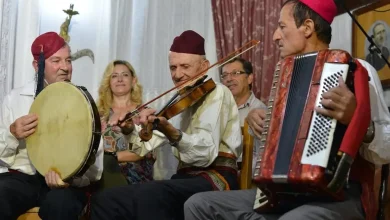
Emerging in the late 18th century and flourishing until the 1940s, Ahengu Shkodran is one of the most iconic forms of Albanian urban music. Influenced by Oriental melodies, this style evolved into a sophisticated, unique musical tradition that set itself apart from other Albanian folk genres.
In Shkodra, musicians adapted Middle Eastern influences and fused them with local styles, creating an elegant blend of melody and rhythm. Ahengu was traditionally performed in weddings, family gatherings, and private courtyards, before expanding to concert stages and national media.
Main Instruments in Ahengu Shkodran
Saz – A ten-stringed instrument of Oriental origin, leading the melody.
Qemane (Violin) – Adds soft, expressive tones to the performance.
Dajre (Tambourine) – Provides the gentle yet distinct rhythm of ahengu.
The earliest recorded Ahengu ensemble was led by Mehmet Shllaku in the late 18th century. To this day, Ahengu Shkodran remains a timeless and irreplaceable musical treasure in Albania.
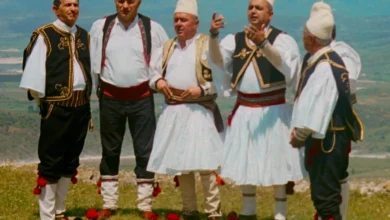
Isopolifonia – Albania’s UNESCO-Recognized Polyphonic Tradition. Isopolifonia is one of the most distinctive forms of Albanian folk music, honored by UNESCO as an Intangible Cultural Heritage. It is primarily found in Labëria, Çamëria, Myzeqe, and Toskëria, with Labëria being particularly famous for its intricate four-part polyphonic singing.
The Structure of Isopolifonia
Marrësi (Lead Singer) – Initiates the melody and sets the tone.
Pritësi (Responder) – Follows and harmonizes the melody.
Mbajtësi (Holder) – Supports the song by maintaining a steady pitch.
Hedhësi (Overlayer) – Introduces additional vocal elements, enriching the song’s complexity.
These polyphonic songs can be festive, epic, lyrical, or ritualistic, reflecting the life, joys, sorrows, and history of the Albanian people.
K’cimi i Tropojës: The Dance That Defines Northern Albania
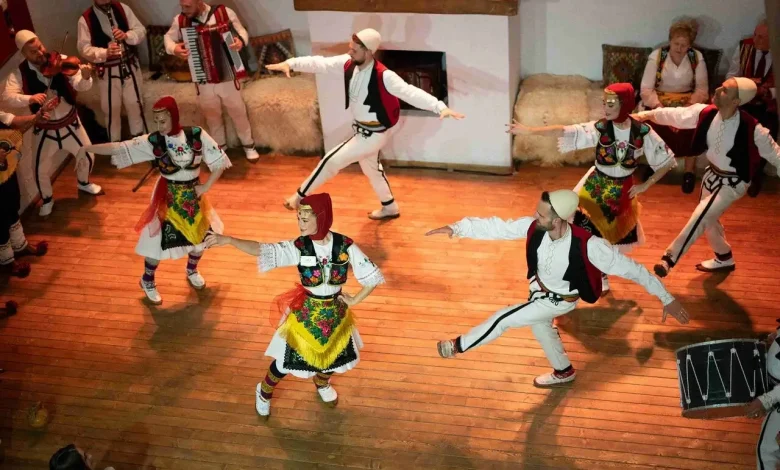
Recognized by UNESCO, K’cimi i Tropojës is one of Albania’s most energetic and expressive folk dances.
Distinctive Features of K’cimi i Tropojës – Dynamic, vertical movements, where dancers perform high jumps off the ground. Minimal physical contact, as partners face each other while dancing. Partner switching, particularly in wedding dances and festive occasions.
Performed at weddings, village festivals, and social ceremonies, this dance serves as a powerful form of cultural expression and social bonding. The dance is accompanied by traditional instruments like the tupan (large drum), çifteli (two-stringed lute), and fyell (flute).
Call-and-Response Epic Songs – The Songs of War and Celebration
Also known as “Majë Krahu” songs, these a cappella epics were historically used for long-distance communication during wartime.
Key Characteristics
A powerful lead vocal, initiating the call. Immediate response by a second singer, blending both voices into one. Concise yet impactful lyrics, often narrating historic battles and heroic tales.
Other Unique Albanian Musical Traditions
Kënga Devollite – Part of the Tosk Iso-Polyphony, featuring clarinets, llautas, and rhythmic dajre percussion.
Kënga Qytetare Shkodrane – A lyrical and melodic urban genre, including wedding and serenade songs.
Kënga Vllahe e Drenovës – A rare form of Vlachs’ polyphonic singing, performed by both men and women.
Melodia me Gjethe – A unique aerophone instrument, where melodies are produced by blowing air through leaves.
Preserving Cultural Heritage with Votra Magazine
A Digital Archive of Albanian Cultural Heritage
Documenting and Showcasing Traditional Music and Dance
Promoting Albanian Arts and Culture to the World
Discover more about Albania’s cultural treasures with Votra Magazine – A journey into the heart of tradition!